
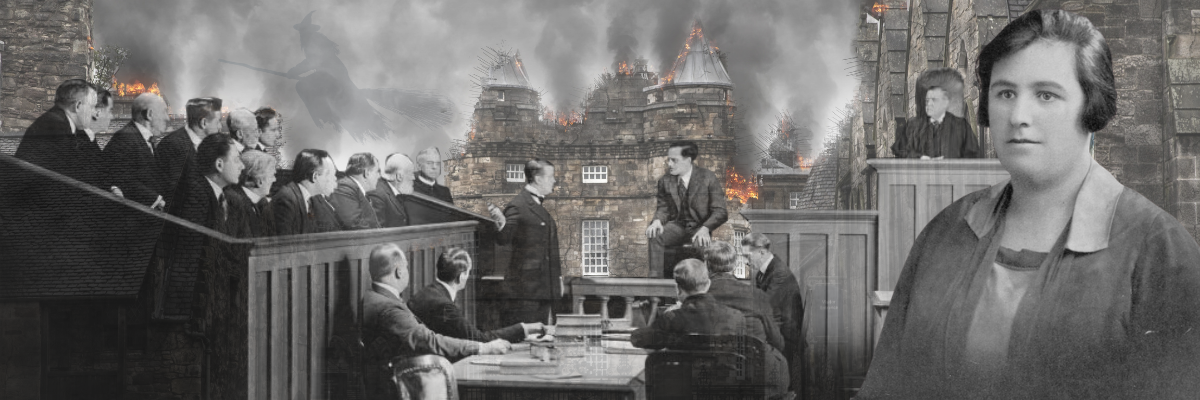
The Last Witch of Britain: The Trial of Helen Duncan
London, England 1944. World War II was raging, Britain was preparing for the Allied invasion of Europe, and the country was on high alert for anything that could threaten national security. So naturally, one of the major cases during this time involved…witchcraft.
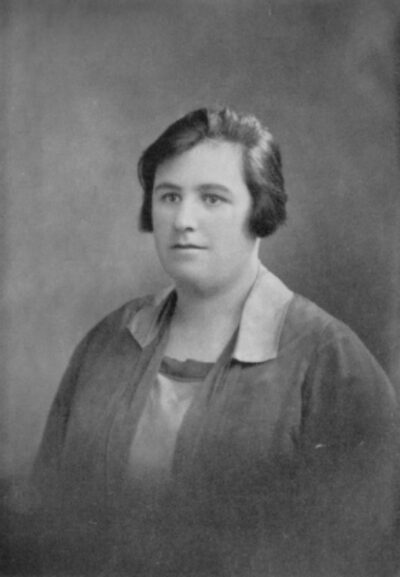
At the center of it all was Helen Duncan, a Scottish spiritual medium who claimed she could communicate with the dead. Her séances had already attracted the attention of believers, skeptics, and even British authorities. But after one particularly troubling message from beyond the grave, Duncan found herself facing something far more earthly: criminal prosecution.
Her case would become one of the strangest trials of wartime Britain and earn her the lasting nickname of Britain’s last witch.
A Medium With a Mysterious Talent
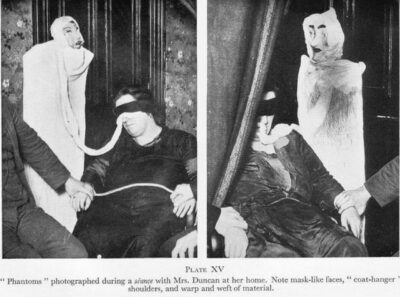
Born in Scotland in 1897, Helen Duncan became known for conducting what were called materialization séances. During these gatherings, Duncan claimed that spirits could physically appear through a substance known as “ectoplasm.” To her supporters, Duncan was a gifted medium capable of connecting grieving families with loved ones who had passed away. To skeptics, the explanation was considerably less supernatural. They accused her of using fabric, paper, masks, and other props to fabricate these supposed spirits and readings.
Still, she developed a devoted following. And during World War II, when thousands of families were desperately waiting for news of loved ones serving overseas, her séances promising messages from fallen servicemen carried an especially powerful appeal.
Then one of those messages caught the attention of the British government.
A Sailor From a Sunken Ship
On November 25, 1941, the British battleship HMS Barham was struck by torpedoes fired by German submarine U-331 in the Mediterranean. The ship rolled onto its side before its ammunition magazines exploded, killing hundreds of sailors. Britain didn’t immediately announce the loss publicly. Families were notified in December, but the Admiralty’s official press release would not occur until January 27, 1942.
Somewhere in that period of secrecy, Duncan held a séance in Portsmouth and reportedly claimed to make contact with the spirit of a dead sailor. According to witness accounts, the sailor announced that his ship was HMS Barham and that it had sunk.
What’s unsettling? Duncan should’ve had zero prior knowledge of this. How she learned about the Barham remains disputed. Relatives of the sailors had already begun receiving notice of the deaths, creating possible avenues for the information to circulate. Still, the incident reportedly brought Duncan to the attention of authorities at a time when wartime secrets were being closely guarded.
And a few years later, the police would arrive at one of her séances themselves.
The Séance That Ended with Police
In January 1944, Royal Navy officers attended one of Duncan’s Portsmouth séances. According to later accounts, things didn’t exactly go as planned. During the séance, Duncan’s supposed spirit guide announced the appearance of one naval officer’s sister. There was just one problem with that revelation: his sister was alive.
The officer became suspicious suspicious and notified his police force. On January 19, plainclothes officers attended another séance. When a “spirit” appeared, police moved in. One officer later testified that he attempted to grab the apparition and found Duncan standing on her chair while apparently trying to conceal white fabric.
When the séance was over, Helen Duncan was under arrest. But what followed was far stranger than a routine fraud prosecution.
Dusting Off the Witchcraft Act
Cases involving allegedly fraudulent fortune tellers and mediums were commonly prosecuted under Britain’s Vagrancy Act. Authorities took a different route with Duncan. She was prosecuted under Section 4 of the Witchcraft Act of 1735, a law that was more than 200 years old.
Despite its name, the law didn’t actually make witchcraft itself a crime. In fact, the Act reflected a shift away from prosecuting people on the belief that witches truly possessed supernatural powers. Instead, it punished people who pretended to practice witchcraft, sorcery, enchantment, or conjuration.
In other words, Helen Duncan wasn’t standing trial because the British government believed she was a witch. She was standing trial because prosecutors alleged that she had pretended to summon the dead. That distinction did little to make the case any less bizarre.
Spirits Take the Stand…Sort Of
Duncan’s trial began at London’s Old Bailey in March 1944 and attracted considerable public attention. Witnesses described her séances in detail. Supporters testified about apparitions they believed they had seen. Prosecutors presented their own evidence suggesting Duncan’s “powers” were something considerably more ordinary.
The National Archives still preserves photographic evidence submitted during the 1944 proceedings, offering a glimpse into just how seriously the government approached the case.
Duncan’s defense even wanted her to demonstrate her alleged abilities, but the judge refused to allow a séance to be conducted for the jury. After days of testimony involving spirits, séances, and alleged ectoplasm, the jury returned its verdict.
Guilty.
Duncan was convicted of conspiracy to violate the Witchcraft Act and sentenced to nine months in prison. Britain was fighting a world war, preparing for D-Day…and had just sent a Scottish medium to prison under an 18th-century witchcraft law.
Churchill Was Not Amused
Prime Minister Winston Churchill was reportedly furious about the prosecution. After Duncan’s conviction, Churchill wrote to Home Secretary Herbert Morrison questioning why the Witchcraft Act of 1735 had been used in a modern court. He complained that precious time and resources had been devoted to a trial of “obsolete tomfoolery.”
There has long been speculation that Duncan’s prosecution was motivated partly by national-security concerns. With the Allied invasion of Normandy approaching, authorities may have worried about what military information she might reveal, or appear to reveal, during future séances.
The exact role those concerns played remains debated, however. Duncan was formally prosecuted over allegedly fraudulent spiritual manifestations, not for revealing military secrets.
Either way, the timing gave an already unusual trial an even stranger backdrop.
The End of the Witchcraft Act
Her prosecution also became part of a broader debate over Britain’s laws governing spiritualism and fraudulent mediums. Seven years later, Parliament repealed the Witchcraft Act. The Fraudulent Mediums Act of 1951 replaced it with legislation aimed specifically at people who fraudulently claimed to act as spiritualist mediums for money.
Duncan is frequently described as the last person prosecuted or convicted under the Witchcraft Act, but the history is slightly more complicated. Another medium, Jane Rebecca Yorke, was convicted under the Act later in 1944.
Helen Duncan does hold one particularly unusual distinction: She was the last person imprisoned in Britain under the Witchcraft Act.
One Final Séance
Prison didn’t end Duncan’s career as a medium. Years later, in November 1956, police once again raided a séance she was conducting, this time in Nottingham. Duncan wasn’t arrested, but the incident quickly became another part of her legend. Supporters later claimed that police had interfered with Duncan while she was in a trance, which seriously injured her. Duncan died several weeks later on December 6, 1956.
There is no established evidence that the raid caused her death. Accounts of her health indicate that she had suffered from medical problems for years. But perhaps it’s fitting that even Duncan’s final days became surrounded by stories that blurred the boundary between documented history and the supernatural.
Trial and Terror Takeaway
Was Helen Duncan genuinely speaking to the dead? Was she an extraordinarily convincing fraud? And how exactly did she learn about the sinking of HMS Barham before Britain publicly announced it?
More than 80 years later, believers and skeptics still disagree. Helen Duncan went to court to be tried as a witch and came out with a nine-month prison sentence, an angry prime minister, and more questions than answers.
Her case remains one of the strangest intersections of criminal law, wartime secrecy, and the supernatural. And while Duncan may not technically have been Britain’s final “witch,” history has ensured that the nickname followed her long after the courtroom doors closed.
Perhaps some reputations are simply too haunting to bury.
Sources:
https://www.historic-uk.com/HistoryUK/HistoryofScotland/Helen-Duncan-Scotlands-last-witch/

https://www.hmsbarham.com/ship/sinking.php#sinking
https://psi-encyclopedia.spr.ac.uk/articles/helen-duncan/
Images under creative commons from: https://commons.wikimedia.org/wiki/Category:Helen_Duncan
 Probation Violations in North Carolina: What Can Send You Back to Court?