The Ouija Board Jury: When Jurors Tried to Contact the Dead
Most juries are instructed to reach a verdict based only on the evidence presented in court:
Witness testimony? Fair game.
Physical evidence? Absolutely.
…A conversation with the victim’s ghost? Not so much.
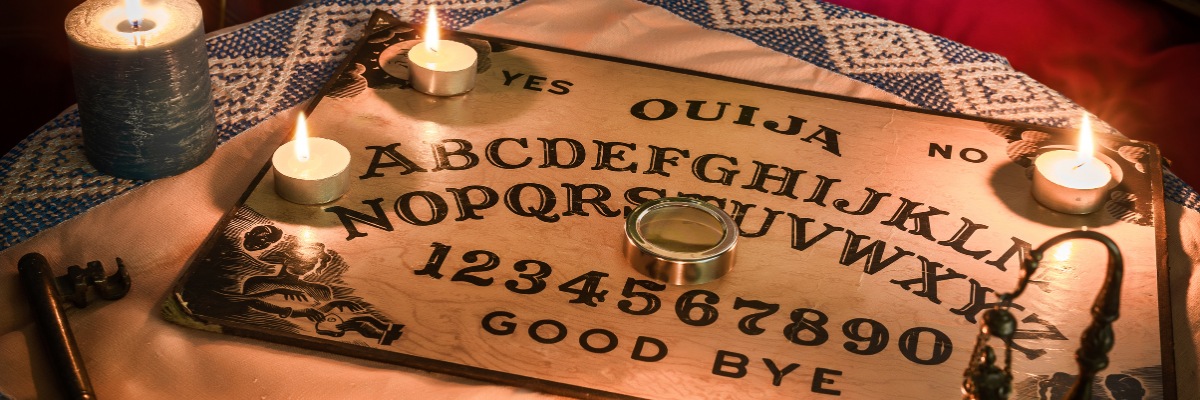
But that’s exactly what happened during a 1994 murder trial in England, when four jurors gathered around a makeshift Ouija board and attempted to contact one of the murder victims. The result wasn’t just a spooky story from inside a jury hotel. It was enough to overturn a double-murder conviction and send the entire case back to court.
The Murders of Harry and Nicola Fuller
In February 1993, newlyweds Harry and Nicola Fuller were found murdered at their cottage in Wadhurst, East Sussex. Harry Fuller, a 45-year-old car dealer, had been shot once through the back. His 27-year-old wife, Nicola, was shot four times.
Nicola survived long enough to crawl to a bedroom and dial 999 (the UK emergency telephone number). Her injuries made it difficult for her to speak and her final attempt to get help was unsuccessful.
Police eventually arrested Stephen Young, a 35-year-old insurance broker who knew Harry Fuller. Prosecutors alleged that Young, who was heavily in debt, went to the Fullers’ home intending to steal money. Young denied killing the couple. He admitted visiting the property but claimed that he found Harry already dead and fled because he feared for his own safety.
His first trial began in 1994. And for several weeks, the jury heard the evidence against him. Then some of them apparently decided to seek evidence from somewhere else entirely.
An Overnight Stay Takes a Strange Turn
During the trial, the jury had to spend a night together at a hotel. What happened there would eventually become almost as infamous as the case itself.
After drinking together, four members of the jury reportedly constructed a makeshift Ouija board and held what amounted to a séance. Their goal was allegedly to contact one of the Fullers and ask who had committed the murders. According to later accounts, the jurors placed their hands on a glass and began asking questions.
They reportedly asked whether the victim’s spirit was present. The answer was “yes.” Then came the question that no juror was supposed to be asking a Ouija board:
Who killed you? …Stephen Young.
The séance supposedly produced an answer that pointed right to the murder suspect. Whatever anyone believes about Ouija boards, spirits, or the ability of the dead to identify their killers, there was an immediate legal problem. None of this happened in the courtroom.
Guilty…But Not Quite the End
On March 23, 1994, the jury convicted Stephen Young of murdering Harry and Nicola Fuller. He received two life sentences. For a few weeks, that appeared to be the end of the case. Then reports about the jury’s paranormal experiment began to surface.
By June, the Court of Appeal had ordered an investigation into allegations that four jurors had used a Ouija board during their hotel stay. Statements were obtained from all 12 jurors as authorities tried to determine exactly what had occurred outside the courtroom.
And suddenly, Young’s murder conviction had a very unusual problem.
You Can’t Call a Ghost as a Witness
The issue before the Court of Appeal wasn’t really whether Ouija boards worked. Instead, the problem was much simpler. Jurors are supposed to decide a case using the evidence properly presented at trial. They aren’t supposed to conduct their own investigations or experiments and then use whatever they discover to help reach a verdict.
Young’s attorneys argued that the Ouija-board session amounted to exactly that: an outside experiment introducing information that had never been presented as evidence. The prosecution argued that the episode was essentially an internal matter among jurors and shouldn’t invalidate their unanimous verdict.
In October 1994, Young’s convictions were quashed, and a new trial was ordered. The court concluded that the Ouija-board incident represented a serious irregularity because the jurors had considered something outside the evidence presented in court.
In other words, even a message supposedly coming from beyond the grave doesn’t get around the rules of evidence.
Back to Court
Overturning the conviction didn’t mean Stephen Young was free. Instead, prosecutors tried him again before an entirely new jury. This time, no supernatural consultations were reported.
At the second trial, prosecutors once again presented their case that Young had deliberately killed the Fullers. Evidence included his connection to Harry Fuller, his financial difficulties, and evidence placing him in the area around the time of the murders.
Young continued to deny that he was the killer and in December 1994, the second jury reached its verdict.
Guilty. Again.
Young was once more convicted of both murders and received two life sentences. The paranormal episode had succeeded in overturning his first conviction, but it hadn’t changed the ultimate outcome.
Trial and Terror Takeaway
The strange story of R v. Young wasn’t really a case about whether the dead can speak. It was about what happens when jurors listen to evidence from outside the courtroom.
The first jury heard weeks of testimony and evidence before convicting Stephen Young. But once several jurors decided to conduct their own supernatural investigation, the integrity of that verdict came into question.
The Court of Appeal didn’t need to determine whether a spirit actually “gave a testimony.” The fact that jurors had gone looking for answers outside the courtroom was enough to require another trial. And so Stephen Young became part of one of the strangest chapters in British jury history.
Turns out even testimony from beyond the grave has to follow the rules… Even if a ghost was speaking the truth.
Sources:
https://www.the-independent.com/news/uk/couple-s-murderer-jailed-in-ouija-board-retrial-1389824.html

https://www.the-independent.com/news/uk/retrial-order-in-ouija-case-1444806.html

https://pursuit.unimelb.edu.au/articles/trial-by-ouija-board-when-jurors-misbehave
 The Last Witch of Britain: The Trial of Helen Duncan